
The Philippines' first quantum computing lab for power engineering
A cross-disciplinary research hub at the Technological Institute of the Philippines, blending classical computing with quantum approaches, AI, optimization and emerging digital technologies.
Where qubits meet the power grid
QISLaP is a trailblazing research facility, the first of its kind in the Philippines, focused on applying hybrid quantum computing to real-world power engineering problems. It is a cross-disciplinary research hub that blends classical computing with quantum approaches, AI, optimization and emerging digital technologies.
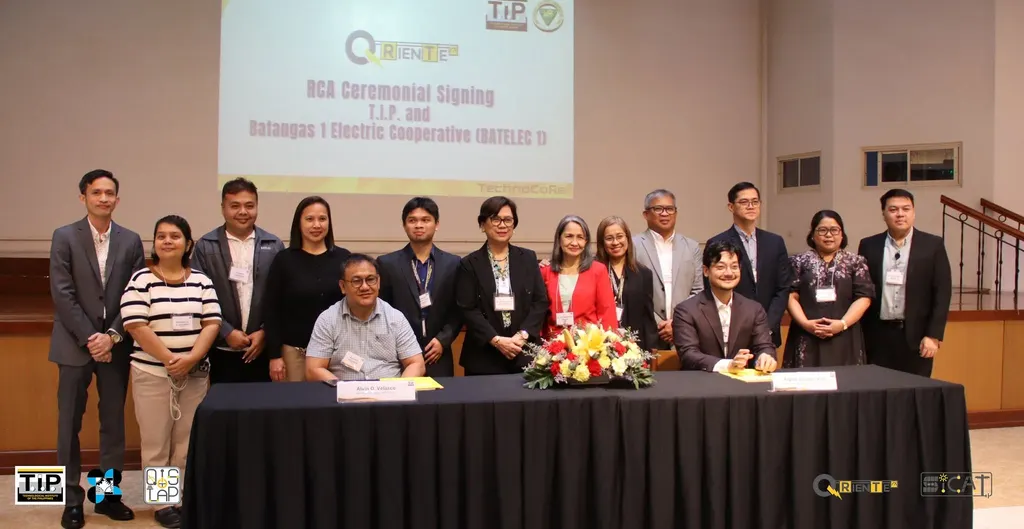
Hosted by the Technological Institute of the Philippines under TechnoCoRe (Technopreneurship and Collaborative Applied Research) and funded by DOST-PCIEERD, QISLaP was formally inaugurated on 21 March 2025, together with the grand MOU signing for its projects.
The lab supports graduate thesis and dissertation work, where students build deep learning and machine learning models to predict electricity demand, wind speed and solar irradiance.
Hybrid solutions for power and energy
To develop hybrid quantum computing solutions that enhance energy production, distribution and consumption, addressing the challenges of power and energy through:
|hybrid⟩
Hybrid quantum computing
Leveraging machine learning and optimization techniques to address complex challenges in power and energy.
|classical⟩
Classical computing
Machine learning, artificial intelligence and optimization.
|emerging⟩
Other technologies
Edge and cloud computing, real-time simulation, blockchain and more.
A national center of excellence in applied quantum computing
- |00⟩
Bridge the gap between classical and quantum computing in solving power and energy engineering problems.
- |01⟩
Be a national center of excellence in quantum computing applied research for power and energy.
- |10⟩
Inspire curriculum modernization, faculty development and student training in quantum and intelligent systems.
- |11⟩
Lay the groundwork for future smart grid solutions powered by next-generation computing.
From hybrid models to self-optimizing grids
A phased evolution of power system intelligence, from hybrid quantum-classical decision support to adaptive, quantum-enhanced smart grids.
2024 – 2027
Hybrid intelligence foundations
Classical AI/ML, optimization and multi-criteria decision-making, augmented by hybrid quantum models. Cloud computing and IoT integration enable early AIoT deployment across the energy value chain.
2027 – 2032
Real-time, distributed control
SaaS frameworks for power system operations, hybrid quantum decision support systems (HQ-DSS) coupled with real-time simulation, edge computing and digital twins, generative AI, and quantum-secure blockchain.
2030 onwards
Smart decision support systems
Adaptive, predictive and self-optimizing systems orchestrating smart grids, microgrids and networked microgrids, underpinned by quantum-enhanced analytics.
Host, funder and location
Host institution
Technological Institute of the Philippines (T.I.P.), under TechnoCoRe (Technopreneurship and Collaborative Applied Research).
tip.edu.phFunding agency
Department of Science and Technology – Philippine Council for Industry, Energy and Emerging Technology Research and Development (DOST-PCIEERD).
pcieerd.dost.gov.phLab location
Room A301, Arlegui Building, T.I.P. Manila1338 Arlegui Street, Quiapo, Manila 1001Open in Google Maps
Inauguration day
With DOST-PCIEERD, Department of Energy, PBI, BATELEC I and the Quantum Computing Society of the Philippines